Source 14 piece kitchen utensil set for Cooking, Baking, and Serving
Compare 30 listings for the 14 piece kitchen utensil set to find options in stainless steel, silicone, and non-stick styles. Buyers can review specifications, certifications, and packaging details from suppliers in China to match their sourcing needs.
Key considerations
Products List




Comprehensive Sourcing Guide
Strategic Sourcing Guide for 14-Piece Kitchen Utensil Sets
Understanding Product Variations and Core Specifications
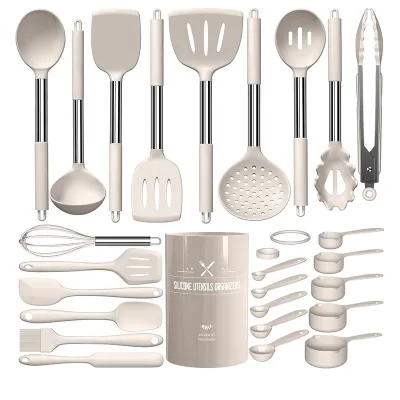
When sourcing a 14-piece kitchen utensil set, buyers must first recognize that the market offers diverse configurations rather than a single uniform product. The core keyword often encompasses various material compositions, including stainless steel, silicone, and hybrid designs featuring wooden handles. In the current supply landscape, specific product models such as the EZ29159 and EZ28174 demonstrate the variability in physical dimensions. For instance, one observed configuration measures 13.66 x 5.16 x 4.96 inches, while another variant is specified as 13.8 inches in length by 4.25 inches in width. These dimensional differences directly impact packaging efficiency and shipping costs, making precise specification verification a critical first step.
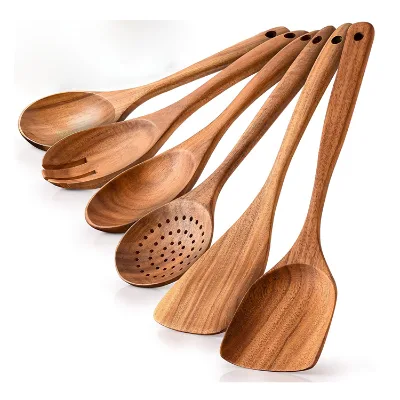
The material composition is a primary differentiator. Some listings highlight "Stainless Steel" as the primary construction material, offering durability and a professional aesthetic. Conversely, other segments focus on "Silicone" products, often paired with wooden handles to combine heat resistance with ergonomic grip. The silicone variants frequently cite a hardness of Shore 70A, a metric indicating the material's flexibility and resistance to deformation under pressure. Furthermore, the production process for silicone items often involves compression molding, utilizing platinum catalysts or double 2,4 vulcanizing agents to ensure structural integrity. Buyers should verify if the set includes a 14-piece count specifically, as some suppliers list sets as 6-piece, 12-piece, or 19-piece, and the 14-piece configuration may require custom assembly or specific model selection.
Technical Compliance and Certification Verification
Compliance with international safety standards is non-negotiable for kitchenware entering the food service or retail sectors. The supply chain data indicates that reputable manufacturers often provide certifications such as FDA, LFGB, and CE/EU. These certifications are particularly relevant for silicone and stainless steel products, ensuring that the materials do not leach harmful substances into food. For silicone-based utensils, the presence of FDA and LFGB certification is a strong indicator of food-grade safety. Additionally, the CE/EU mark suggests compliance with European safety, health, and environmental protection requirements.
Buyers must distinguish between general product standards and specific material certifications. While some products are categorized under a general "Kitchen Utensil Set" standard, others adhere to specific outer box dimensions and gross weight standards, such as an outer box size of 58x50x26cm with a gross weight of 14kg, or a 44x44x35.5cm box with 13.6kg. These logistical standards are often tied to the certification process, as they reflect the manufacturer's ability to maintain consistent quality control during packaging. It is also essential to verify sterilization methods. Some suppliers explicitly state "Without Ethylene Oxide Sterilization," which is a critical detail for buyers concerned about chemical residues on food-contact surfaces.
Cost Drivers and Pricing Structure Analysis
The pricing structure for kitchen utensil sets is influenced by a complex interplay of material costs, customization requirements, and order volume. The observed price range in the market spans from $0.50 to $15.00 per unit, a wide variance that reflects differences in material quality, design complexity, and branding. Stainless steel sets typically command higher price points due to the raw material costs and the precision required in manufacturing. Silicone sets with wooden handles may vary significantly based on the source of the wood and the quality of the silicone compound used.
Customization is a major cost driver. The availability of "Customized Logo" and "Personal Label" services allows buyers to brand products, but this often increases the unit cost and the Minimum Order Quantity (MOQ). The observed MOQ range in the market is substantial, spanning from 12 units to 1,000 units. A specific model, identified as "Professional Cooking Tools Set-080I," lists an MOQ of 100 units. Buyers must balance the desire for lower unit costs against the capital required to meet higher MOQs. Additionally, packaging requirements, such as individual polybag packing versus bulk carton packing, affect the final landed cost. The weight of the product, ranging from 0.81kg to 1000g depending on the set, also influences freight charges, which are a significant component of the total cost of ownership.
Typical Applications and Usage Scenarios
The versatility of a 14-piece kitchen utensil set makes it suitable for a wide array of applications, from residential home kitchens to commercial food service environments. The "Non-Stick" style attribute is particularly valuable for use with modern cookware, preventing damage to sensitive pot and pan surfaces. This feature is often highlighted in product descriptions for sets designed for everyday cooking tasks. The inclusion of tools like spatulas, ladles, and tongs in a 14-piece configuration suggests a comprehensive solution for various cooking methods, including frying, boiling, and baking.
For commercial buyers, the "Eco-Friendly" style and "Food Grade Material" attributes are increasingly important. Sets made with silicone and stainless steel are often preferred in professional settings due to their durability and ease of cleaning. The "Silicone Kitchen Utensils Sets with Wooden Handle" variant offers a specific aesthetic appeal that aligns with modern kitchen design trends, making it a popular choice for retail resale. The "Colorful" options, which may include seven distinct colors such as light green, deep green, black, grey, pink, and red, allow buyers to target specific market segments, including those looking for gifts or themed kitchen collections. The "New" condition of the products ensures that buyers receive fresh inventory, which is essential for maintaining brand reputation and customer satisfaction.
Supplier Evaluation and Quality Control Protocols
Evaluating suppliers requires a rigorous approach to verifying their production capabilities and quality assurance processes. Buyers should prioritize suppliers who provide detailed technical specifications, such as the "Tolerance: ±0.2mm" observed in certain models, which indicates a high level of manufacturing precision. The curing process for silicone products, involving a second cure at 200°C for 2 to 4 hours, is another critical quality indicator. This process ensures that the material achieves its full physical properties and chemical stability.
Quality control should extend beyond the final product to the packaging and shipping stages. Suppliers often use specific packing standards, such as "12PCS/Box, 16boxes/CTN" or "19PCS/Box, 8boxes/CTN," which must be consistent to prevent damage during transit. The origin of the products, frequently listed as "China" or specifically "Dongguan, China," provides context for the manufacturing ecosystem but does not guarantee quality on its own. Buyers must request evidence of the "Kitchen Utensil Set" standard compliance and verify that the "Outer box size" and "GW" (Gross Weight) match the physical shipment received.
Long-Term Procurement and Strategic Considerations
Sourcing a 14-piece kitchen utensil set is not merely a transactional activity but a strategic decision that impacts long-term supply chain resilience. The "Disposable: Non-Disposable" attribute confirms that these products are designed for repeated use, necessitating a focus on durability and longevity. Buyers should consider the lifecycle of the product, ensuring that the materials selected can withstand frequent washing and high-temperature exposure without degrading.
The "Customization: Available" feature offers a pathway for brand differentiation, but it requires careful management of lead times and inventory. As the "prod_model" varies across different configurations, maintaining a consistent supply of specific models like the "EZ28173" or "silicone kitchen utensils sets cooking tools sets" requires strong communication with the supplier. Buyers should also monitor the "Condition: New" status to ensure that inventory turnover is managed effectively to prevent stock aging. Finally, the "Standard: customized" option allows for flexibility in meeting specific client needs, but it demands a robust quality control framework to ensure that custom specifications do not compromise the overall safety or performance of the utensil set. By adhering to these strategic considerations, buyers can secure a reliable supply of high-quality kitchenware that meets both functional and regulatory requirements.
FAQs
What certifications are available for these kitchen utensil sets?
Available certifications include FDA, LFGB, and CE/EU for food safety compliance. Stainless steel and silicone variants often carry these marks to ensure materials do not leach harmful substances. Buyers should verify specific certification documents for each model before ordering.
Which materials are used in the 14 piece kitchen utensil set?
Products are constructed from food-grade silicone with wooden handles or stainless steel. Silicone items typically feature a hardness of Shore 70A and undergo compression molding. Stainless steel sets offer durability while silicone variants provide heat resistance and ergonomic grip.
Can I customize the logo on the kitchen utensil sets?
Customization is available for personal labels and customized logos on the products. This service allows buyers to brand the items but may affect the minimum order quantity and unit cost. Specific customization requirements should be confirmed with the manufacturer prior to production.
What is the minimum order quantity for these kitchen utensil sets?
The minimum order quantity ranges from 12 to 1,000 units depending on the specific model and customization level. Some professional cooking tool sets list an MOQ of 100 units. Buyers must balance order volume with unit pricing to meet supplier requirements effectively.
How are the kitchen utensil sets packaged for shipping?
Packaging varies by model, with options including 6 pieces per box or 12 pieces per box. Outer carton dimensions and gross weights differ, such as 58x50x26cm with 14kg weight. Individual polybag packing is also used for certain professional sets to ensure product protection during transit.
Where are these kitchen utensil sets manufactured?
Products originate from China, with specific manufacturing locations including Dongguan. The origin information provides context for the supply chain but does not guarantee quality without further verification. Buyers should request evidence of production standards and quality control protocols from the source.
Are these kitchen utensil sets non-stick and eco-friendly?
Yes, the sets feature a non-stick style and are described as eco-friendly. Silicone materials are highlighted for their food-grade safety and resistance to deformation. These attributes make the utensils suitable for use with modern cookware and align with sustainable kitchen design trends.